Bioinformatics
Bioinformatics built around your experiment.
Every lab runs a different experiment, so we don't sell a fixed menu of analyses. We build the pipeline, the tool or the model your experiment needs: tested, documented, running on your infrastructure, and yours to keep.
01 / 05
From one person's idea to a pipeline the whole lab runs.
Most analyses start as an idea tried out on one laptop. We turn it into a pipeline anyone on the team can run, on every sample, with the same result next year.
Pipeline engineering
- Built around your workflow: we map each step with your team, then build from what you have or from scratch
- Every tool in a container with a pinned version, so a rerun gives the same answer
- Runs where your data lives: your cloud account (AWS, Google Cloud or Azure), your cluster or a workstation
- Tests on data with known answers, and checks between steps that stop a bad sample early
- Run time and cost per sample simulated, so you know what scaling up costs before you commit
- Clear reports every scientist on the team can read
Before: one idea
# works on one laptop
for f in glob("data/*.fastq"):
    qc(f)      # fastp
    align(f)   # bwa-mem2
    call(f)    # bcftools
After: a pipeline
| Sample | QC | Align | Call |
|---|---|---|---|
| S01 | |||
| S02 | |||
| S03 | |||
| Container | fastp 1.3.7 | bwa-mem2 2.3 | bcftools 1.24 |
Report: variants per sample, QC summary, versions
- Wall time
- 41 min
- Cost per sample
- $0.38
- Tests
- 12 of 12 passed
02 / 05
What could your lab do with its own AlphaFold?
The 2024 Nobel Prize in Chemistry honored two achievements: predicting a protein's structure from its sequence, and designing new proteins. Both now run as software. We set up AlphaFold and the models that followed for your team, so your scientists can put them to work on their own proteins.
Questions your scientists could ask
- What does our protein look like, and which parts can we trust?
- Where does this compound bind, and roughly how strongly?
- Which of our 200 designs should we make first?
Which models best fit your work, and what it takes to run them, depends on your lab. That's what the first call is for.
Book a 30-minute call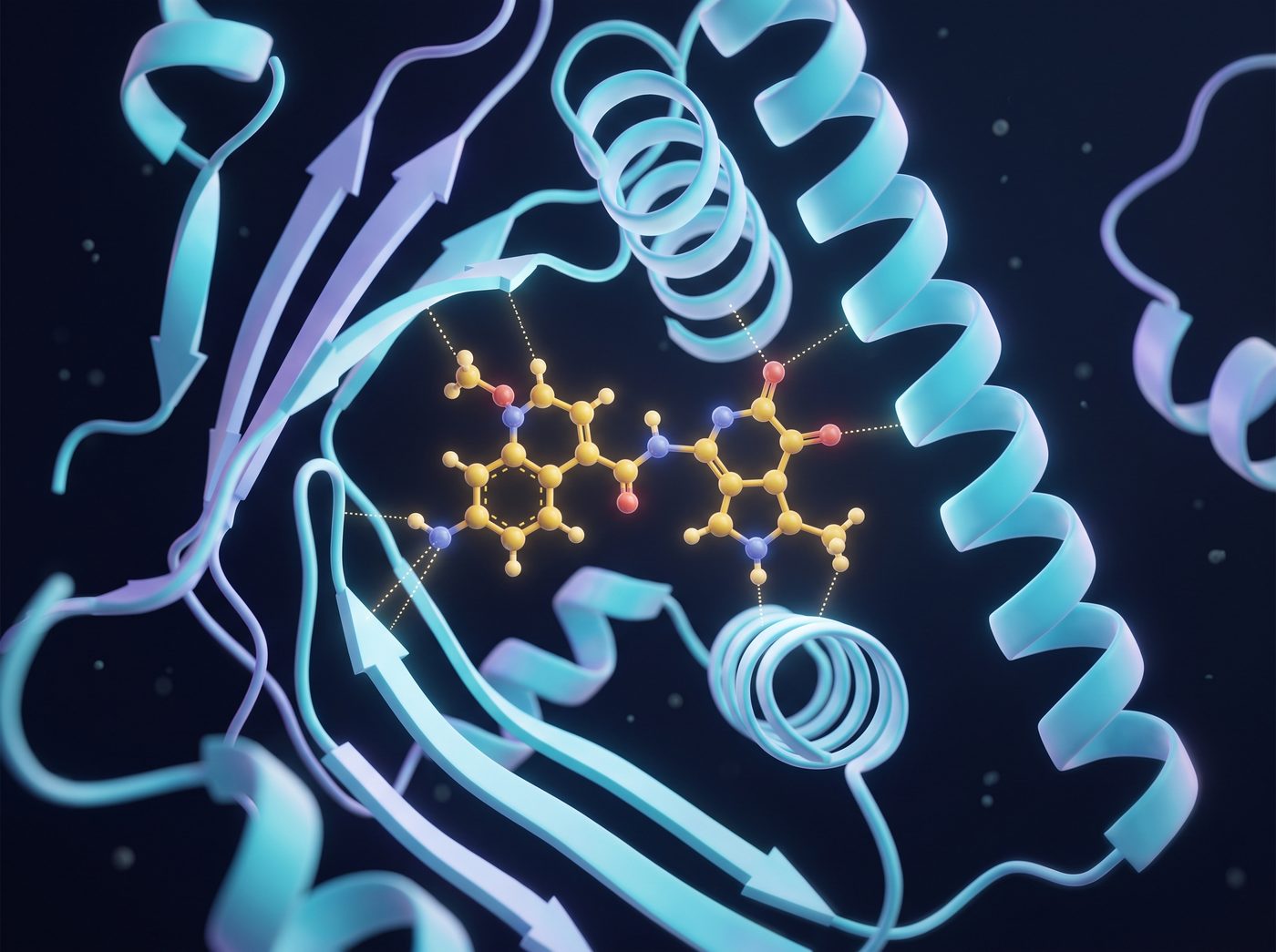
What your scientists can run
-
Structure
AlphaFold 2, ESMFold
Predict a protein's 3D structure from its sequence. AlphaFold 2 draws on related sequences from large databases; ESMFold needs only the sequence, so it can screen thousands.
Open for commercial use
-
Complexes and binding
AlphaFold 3, Boltz-2, Chai-1
Predict how a protein sits with other proteins, DNA, RNA or a small molecule. Boltz-2 also estimates how strongly a small molecule binds.
AlphaFold 3 (non-profit and academic labs)
-
Design
RFdiffusion, ProteinMPNN, BoltzGen
RFdiffusion builds backbones for binders and motif scaffolds, ProteinMPNN writes sequences for them, and BoltzGen designs binders for a target.
Open for commercial use
-
Protein language models
ESM3, ESM C
Learned from billions of protein sequences. ESM3 designs and edits proteins from prompts on sequence, structure and function; ESM C turns sequences into embeddings for your own models.
Open models under MIT since May 2026
Every structure comes with its confidence.
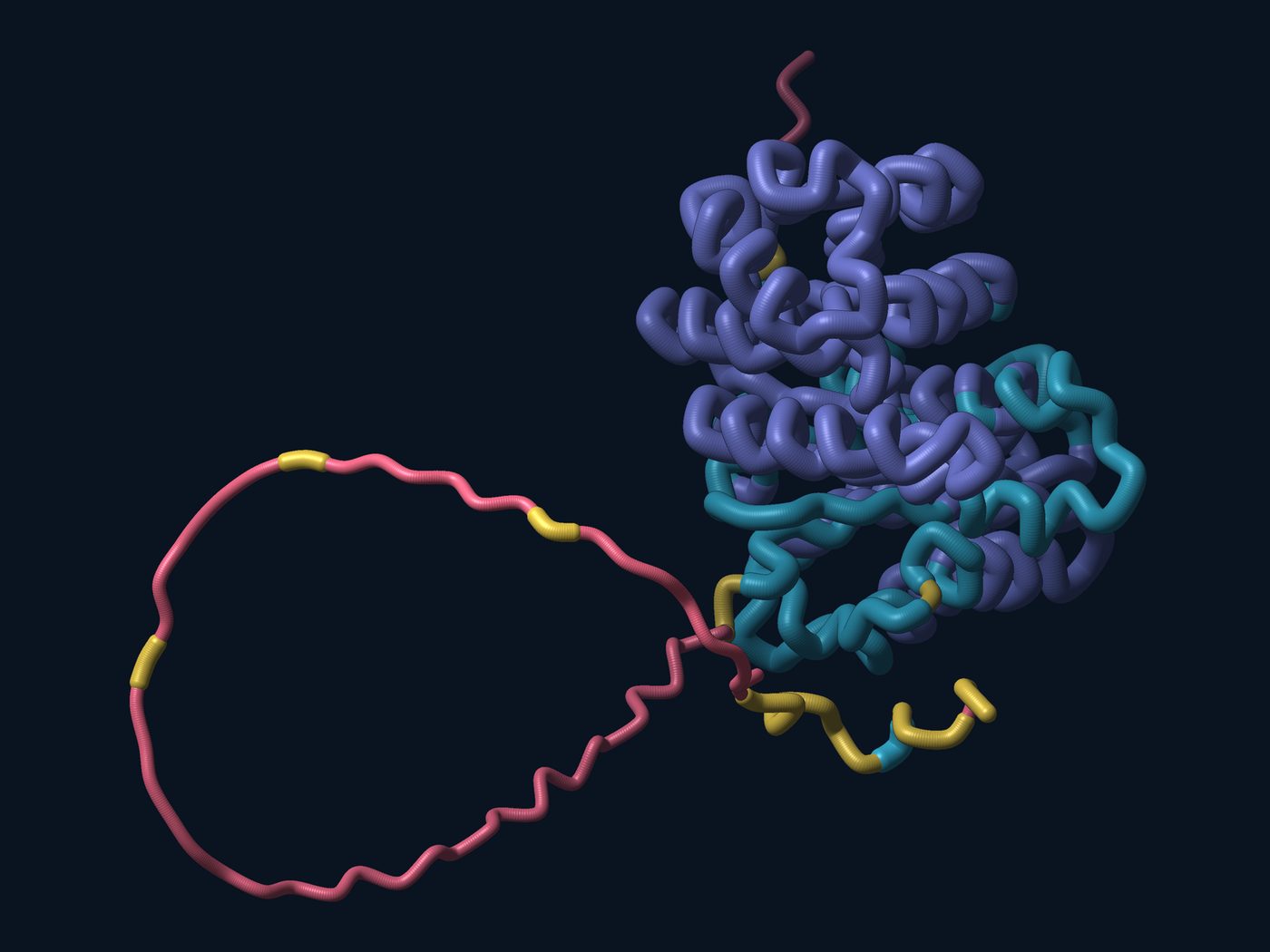
A predicted structure is only as useful as its confidence. The pipeline keeps the model's own scores with every result, so your team sees which parts of a structure to trust.
- pLDDT: the model's confidence in the local structure around each residue
- On the structure: each residue colored by its score, so the reliable parts and the uncertain ones show at a glance (Fig. 3)
- Along the sequence: the score for every residue, so you see exactly where it drops, at a linker, a loop or a disordered tail (Fig. 4)
- very high confidence
- confident
- low
- very low
- above 90, very high
- 70 to 90, confident
- 50 to 70, low
- below 50, very low
03 / 05
Strain-level answers from your sequencing data.
We don't sequence. Your core facility, your provider or your own instrument does; we build the tools that turn the reads into answers: which strain this is, what it carries, and what changed since the last batch.
Long reads, microbial genomics and metagenomics
- Complete genomes from long reads (Oxford Nanopore or PacBio), with short-read polishing only where it still adds accuracy
- Typing (MLST, cgMLST) and SNP distances that show which isolates belong together
- Resistance and virulence genes, plasmids and mobile elements, from one isolate to thousands
- Strain-level profiles from metagenomes: which strains are in a community, not only which species
- Differences from your reference or production strain, listed gene by gene, with the regions the reads could not resolve called out
| Ref | B01 | B02 | B03 | B04 | B05 | |
|---|---|---|---|---|---|---|
| Ref | 0 | 1 | 3 | 2 | 214 | 216 |
| B01 | 1 | 0 | 2 | 1 | 213 | 215 |
| B02 | 3 | 2 | 0 | 3 | 215 | 217 |
| B03 | 2 | 1 | 3 | 0 | 214 | 216 |
| B04 | 214 | 213 | 215 | 214 | 0 | 2 |
| B05 | 216 | 215 | 217 | 216 | 2 | 0 |
- within the cluster threshold: same strain
- over 200 alleles: a different strain
04 / 05
CRISPR workflows, from guide design to hit calling.
Design, screen, verify: analysis built for your library, your cells and your readout, and run the same way for every screen.
Advanced CRISPR workflow development
- Guide design against your genome or a custom reference, with off-target checks
- Pooled screens: read counts, normalization and hit calling (MAGeCK and similar), with QC on every library
- Editing outcomes from amplicon sequencing: indel spectra, knock-in efficiency and allele frequencies (CRISPResso2 and similar)
- Screens, conditions and replicates compared in one place, so a hit has to hold up before anyone follows it
- core essential genes
- non-targeting controls
- other genes
05 / 05
Synthetic DNA, designed to be made and checked when it arrives.
Ordering genes and constructs is fast. Designing them so they synthesize, assemble and express, and proving that the plasmid you received is the one you designed, is where the time goes.
- Codon optimization for your host, balanced against GC content, repeats and RNA structure
- Checks against your vendor's synthesis limits before you order, so fewer designs come back rejected or delayed
- Assembly planning: Golden Gate overhangs and Gibson overlaps, designed and checked
- Whole-plasmid sequencing compared with the design, base by base
Not on this page?
Bring the experiment. We'll build the tool.
Single-cell and spatial data, proteomics, imaging, long time series from a bioreactor: if your lab can measure it, bring it to the call, and we'll tell you straight whether we're the right people to build the analysis. Every tool starts from your experiment, not from a catalog.
How we work
Small, working steps. No black boxes.
-
01
Workflow call
Thirty minutes, free. We map one workflow: where the data starts, where it has to end up, and who loses time in between.
-
02
Written proposal
Scope, timeline and a fixed price for the first stage, in writing, before you commit to anything.
-
03
Build in increments
A working version early, then improvements, each tested on your real files and checked by your scientists.
-
04
Handover and support
Code, documentation and training. Run it yourselves, with us on hand as your workflow changes.
Next step
Which step in your lab still runs on copy-paste?
Tell us in a 30-minute call. You'll leave with a clear next step, whether or not we end up working together.